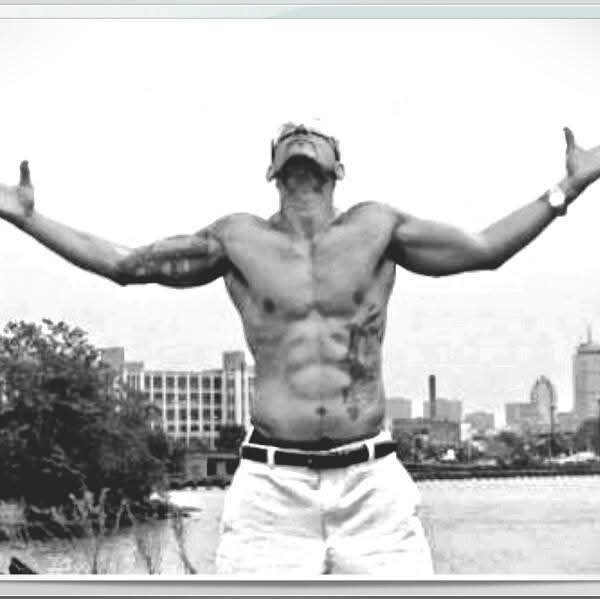

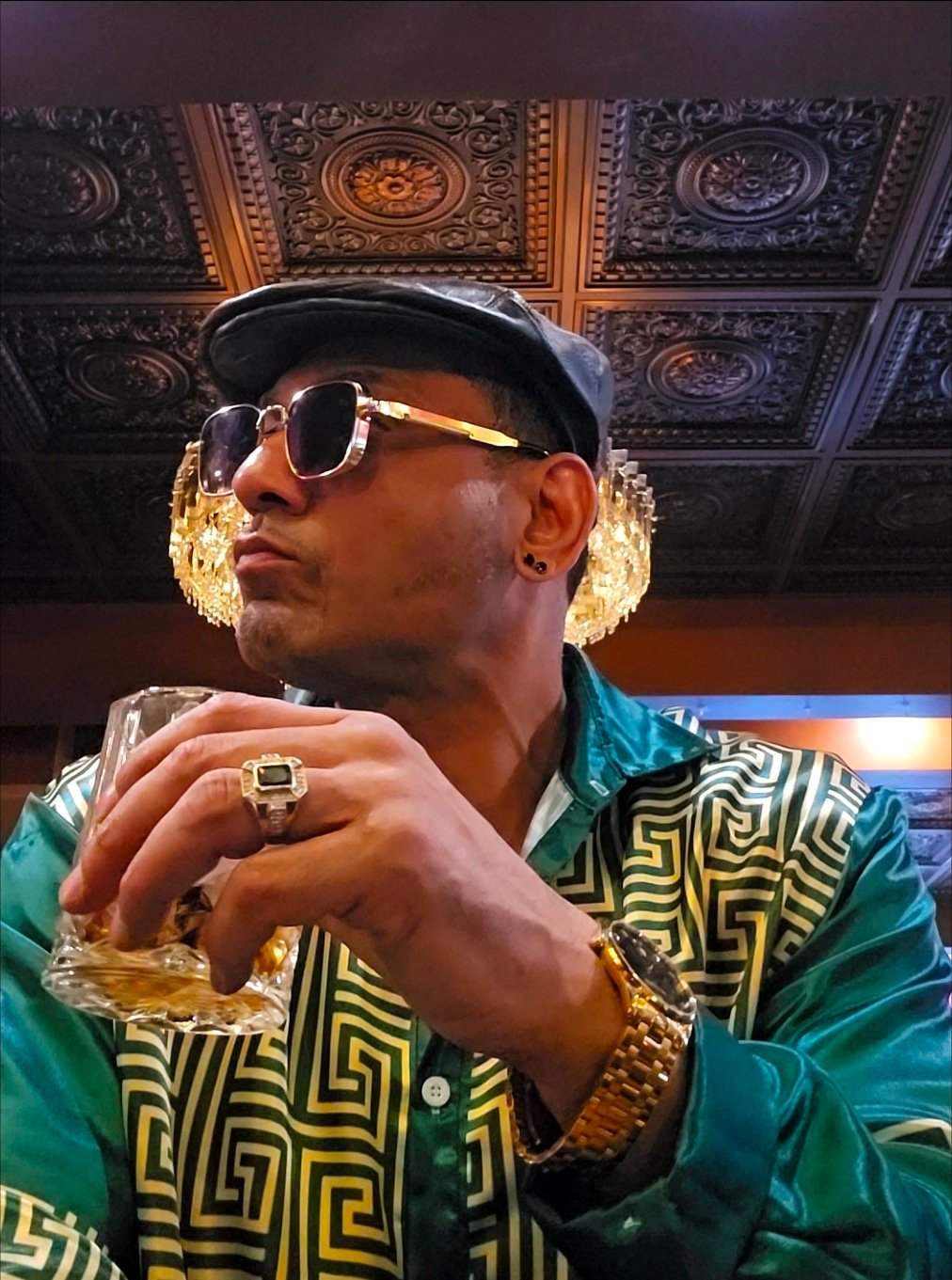
THE SCIENCE OF SCREEN AND SOUND: AN INTERVIEW WITH EDDIE
🎬 Act I: The Awakening
- The Blueprint: Discovered a passion for performance at age five by watching television.
- The Illusion: Early ego led to the assumption that natural storytelling made acting easy.
- The Reality: Learned that true acting is a profound science requiring rigorous, disciplined study.
- The Growth: Over 20 years of camera work across short films, music videos, and vignettes.
Q: How did you first discover your passion for acting, and was there a specific “aha” moment that made you realize you wanted to pursue this professionally?
A: My introduction to acting came from watching television when I was around five or seven years old. I had a sudden moment of clarity where I realized the people on screen were performing. As a kid, I was total “monkey see, monkey do”—I wanted to be just like them and be the star of the show. At that age, money didn’t even register to me; I just wanted the spotlight.
Early on, I had a bit of an ego and assumed entertainment would be easy, thinking that being a natural storyteller gave me an automatic edge. I was completely wrong. When my skills were actually tested, I learned that acting is a profound science that demands rigorous study. There is a massive difference between simply telling a story and truly acting. Today, my passion for the craft is stronger than ever because acting forces me to study humanity and, in turn, understand myself. It has become a powerful vehicle for my mental and spiritual growth. I rely heavily on lived experiences and focus entirely on embodying the spirit of the character I am blessed to play. After more than 20 years in front of the camera doing short films, music videos, and vignettes, my passion is still dialed to 1,000.
🎵 Act II: The Rhythm of Creativity
- The Roots: Started producing original music beats in his grandmother’s basement as a teenager.
- The Business: Founded “Mystic Derelicts,” an independent New England label that ran for five years.
- The Horizon: Actively collaborating with top Boston creators for a new LP dropping in Fall 2026.
- The Balance: Replaces the chaotic concept of “juggling” passions with a strict, calming life routine.
Q: For many upcoming actors, the journey involves juggling other passions. Do you have a background or side interest (like dance, music, or writing) that informs your acting?
A: Absolutely, and that brings us back to music. I started producing my own beats in my grandmother’s basement as a teenager, which eventually grew into local buzz around Boston and the broader New England area. Later, I founded an independent entertainment label called “Mystic Derelicts.” We signed nine artists and ran for about five years before dissolving, and many of those artists are still thriving in solo careers today.
Currently, I’m collaborating with prominent Boston artists and directors like DJ Cruz (ED. O.G.), Twice Thou, Stephen Stix Jose, and Jbril Hayes. Alongside my acting, I am incredibly excited to be releasing a new LP, dropping in the fall of 2026. I also love to dance and write. I am a natural adventurer—if an activity is loud, active, and high-energy, count me in! People always talk about “juggling” passions, but that word sounds a bit too chaotic for me. Instead of juggling, I focus on a steady, systematic routine. Balancing my creative projects with work, the gym, and home life requires a structured rhythm. This routine keeps me deeply grounded and allows me to manage the pressure with minimal anxiety.
🔥 Act III: Fueling the Drive
- The Catalyst: External doubts and industry discouragement only serve as high-octane fuel to go faster.
- The Philosophy: Strives for perfection (a 10) but finds complete joy and peace in the execution (a 7 or 8).
- The Shield: Protects personal peace by refusing to engage with negative energy or critical opinions.
- The Legacy: Views his songs and performances as permanent art that will outlive him.
Q: Did anyone in your life ever discourage you, or tell you that you wouldn’t make it? How did that affect your drive?
A: It just made me drive faster! My parents were actually the first to encourage me and discourage me at the same time. They were promoting education above everything else, and I get it—it’s the old, secure “safety blanket” method. Unfortunately, I wasn’t fond of regular living. I’ve always been a “jump out there, dive right in” kind of guy. I had a vision of extra-special living on an extra-special budget. Along the way, I heard it all: “Don’t waste your time and money,” “Only a select few make it,” “It’s a gamble,” or “You’re struggling to manage your personal life, how are you going to manage a career?” Everyone has their own perspective on other people’s goals. Once I learned that I cannot live my journey based on anyone else’s narrative, clarity met movement. I had to put in extra sessions and lessons to grow from a boy into a man.
I understand that I cannot appease everyone and not everyone will vibe with my personality or talents, but that’s the business of the beholder, not mine. If you shoot for a 10, you have to be cool with a 7 or an 8. For me, fulfillment comes from the steps to completion, the captured moments, and the experience. I find joy in whatever I create inside of me; I own it completely. Everyone has a specific talent or authenticity that is solely theirs—most people just need to tap into it. When I perform or create a song, that is my art, and it will remain well after I’m gone.
Thinking this way protects me from the discouragement of others. If I entertain any doubt, it’s my own, and I am responsible for fixing it. I don’t struggle with the specifics; I just get to work. I live for myself first, and anyone else is welcome to come along for the ride. The haters and the naysayers are necessary motivators—you can’t have up without down, or night without day. When people tell me I’m investing too much for too long in this arena, I just stay true to myself. I love what I do. Whatever spirit is provoking negativity or trying to taper my growth won’t get a response from me. If a vibe isn’t healthy, positive, or encouraging, I treat it like a strict diet: I cut it out and move on to the next thing. Naysayers are just a necessary part of the process.
🧠 Act IV: The Method and Character Breakdown
- The Sensory Isolation: Shuts down the outside world entirely to preserve on-set performance energy.
- The Three-Step Script Breakdown:
- The Introduction: Investigating history, motivations, and the psychological profile.
- The Message: Dissecting core themes through the lens of character temperament.
- The Somatic Integration: Reverse-engineering physical posture and natural body language.
Q: What is your go-to process or technique for getting into character and breaking down a script?
A: Getting into character requires a complete shutdown of the outside world. I block out the noise beyond my own body and focus entirely on the role. I firmly believe that who you are off-set heavily impacts your performance on-set. The more grounded, controlled, and disciplined you are in your personal life, the smoother the transition is when it’s time to clock in, switch personas, and go deep.
My breakdown process follows a clear structure:
- The Introduction: I meet the character for the first time and launch an investigation into their history, background, motivations, and psychological profile to identify exactly who they are.
- The Message: I dissect their core message and analyze how they deliver it to the world based on their unique temperament.
- The Somatic Integration: I reverse-engineer their physical identity. I analyze the severity of their actions, assign them a specific temperament level, and marry their thoughts to natural body movements.
I often draw movement inspiration from similar actions in my own past experiences. If I can implement my own imagery, it embeds me even deeper into the core of the character. Every role is a brand-new study and a new challenge. My target is always a natural, believable, captivating, and deeply convicted delivery. I don’t just want to play a part; I dive right in, become the entity, and ride the wave.
Q: How do you handle a script or character that you initially find yourself disagreeing with?
A: If a script challenges my ability to completely transform, or if I find it difficult to connect with the character’s choices, I look at it as the ultimate test of craftsmanship. Disagreeing with a character actually provides a great boundary—it forces me to separate my personal ego entirely from the work. I have to step out of my own belief systems and look at the world strictly through their psychological profile.
My job isn’t to judge the character; my job is to understand their “why” and deliver their truth with absolute conviction, no matter how radical or different it is from my own. I’m grateful for the jewel of a challenge because my aim is to continuously push my abilities forward. Am I willing to accept or participate in roles I may not personally agree with? Definitely. As long as it doesn’t aggravate my core beliefs so deeply that it hinders me from delivering a peak performance.
🎭 Act V: Overcoming Industry Boundaries
- The Stretch: Played a ruthless Honduran cartel lieutenant in Boston for Good Wisdom, Rottweilers Bye the Door.
- The Chaos: Adapts easily to last-minute industry curveballs, including script rewrites 19 minutes before a scene.
- The Mindset: Views auditions as a space where casting directors specifically want to see him, removing the sting of rejection.
Q: Can you describe a role you’ve played that pushed you completely out of your comfort zone, and what you learned from it?
A: Yes. Good Wisdom, Rottweilers Bye the Door—this was an Ennis Entertainment Jae Star Film production where my role was second lieutenant to an inner-city carbachol, a Honduran cartel member controlling things in Boston. Antonio, the director, always spoke of greatness and used the classic phrase, “You either got it or you don’t,” right before yelling “Action!” Everything on that set had to be great. Coming off the bench to perform alongside a cast of highly experienced, well-seasoned, and skilled professionals meant I had to bring that exact same energy.
Q: What has been the most surprising or unexpected part of navigating the entertainment industry so far?
A: How unpredictable it is and how constantly it switches. I originally set out with an assumed, controlled direction for my journey, but I quickly found out this industry changes direction unexpectedly on a regular basis. I’ve witnessed script changes happen 19 minutes before action, and scheduled shoot times overlap into long, grueling hours. My journey here is constantly surprising me with unexpected twists. I started out strictly as a musician, and it evolved into acting. I’ve come to realize that wherever this venture takes me is exactly where I am meant to be.
Q: How do you navigate the mental challenge of auditions, and how do you process rejection?
A: I focus on relaxation first. I constantly remind myself that I’m not here by accident, and I’m not just here for the script—I’m here because I am me. They want to see what I bring to the table, and then they want to see me assume the character. Telling myself this gives me a sense of ownership over the role. It allows me to focus on natural responses and authentic actions within the scenario.
Rejection is never personal to me; it’s completely cut and dry. You either fit the visual and tonal script or you don’t—there’s no forcing it. I might not be right for the part for a multitude of structural reasons, whether it’s my look or my voice. If a director is shooting a military scene in the desert mountains, they aren’t going to use a Volkswagen for the shot. I view casting the exact same way.
🤝 Act VI: True Collaboration and Vision
- Scene Dynamics: Approaches scene partners with radical social transparency to rapidly unlock authentic chemistry.
- Director Alignment: Adopts a universal baseline policy—follow instructions, drop the ego, and serve the director’s specific vision.
- The Goal: Aims to deliver deep, soul-touching performances that leave audiences demanding to see more of his work.
Q: Collaboration is a massive part of this job. How do you approach building chemistry with scene partners or working with a director whose vision differs from your own?
A: Building chemistry with scene partners is easily one of the most important preparation steps, if not the absolute most important. I approach scene partners by being open-minded, completely willing, and objective. I am naturally very social, and being transparent allows for deeper, quicker connections. I can be genuinely silly, but I rely heavily on improv practices and simply studying my scene partners’ rhythms. I try to give them a piece of my true self outside of the business—not by oversharing personal secrets, but by showing my natural behavioral persona.
With directors, it’s a whole different ballgame because the majority of them have entirely different styles and techniques. I choose a standard, reliable behavioral pattern for all of them: follow instructions, take nothing personally, and always remember that this is the director’s unique vision. Whatever service the director has hired you to perform is exactly what needs to be carried out. For me, it’s all about nailing their core message correctly.
Q: Which actors or creators do you currently look up to, and whose career trajectory inspires your own?
A: Mel Gibson is at the top for me right now because he builds sensitive, impactful productions like The Passion of the Christ and the upcoming Resurrection. I love the word, so I really respect his artistic choices. Of course, Denzel Washington is right there alongside him, followed by many others. Denzel is the ultimate trajectory hero inspiring my career path today.
Q: If you could write your own dream role, what kind of story or character would you be tackling?
A: The story of my life—Eddie’s testimony, starring me, of course! It would be a powerful story of transitioning out of a victim mindset and becoming truly victorious physically, mentally, and spiritually. Assumed role: myself.
Q: When audiences watch your current or upcoming projects, what is the main message or feeling you hope they take away?
A: I want them to see that I am great at what I do, that I successfully executed my role to perfection, brought the character to life, and touched their soul with the performance. Most of all, when they walk away, I want them to immediately start looking for my name in other productions.
Follow him on social media and don’t miss a move!
BEASTZ DELEON FB URL: https://www.facebook.com/
BEASTZ INSTAGRAM URL: https://www.instagram.com/
EDDIE CEFALO INSTAGRAM URL: https://www.instagram.com/
BEASTZ DELEON SNAPCHAT URL: https://www.snapchat.com/add/
BEASTZ DELEON TIKTOC URL: tiktok.com/@beastzdeleon.
BEASTZ INSTAGRAM URL: https://www.instagram.com/
EDDIE CEFALO INSTAGRAM URL: https://www.instagram.com/
BEASTZ DELEON SNAPCHAT URL: https://www.snapchat.com/add/
BEASTZ DELEON TIKTOC URL: tiktok.com/@beastzdeleon.